London Life Sciences Week 2025: A spotlight on innovation and collaboration
12th December 2025
We are delighted to have hosted another successful London Life Sciences Week! Our 2025 event was nothing short of exceptional, fostering new partnerships and shining a light on the groundbreaking work that is being done across the sector.
With more than 100 events spanning the week, this is one of the most impactful sector events of 2025. It’s a reflection of London’s position as Europe’s life sciences capital and top city outside the US for biotech funding, attracting $2.1bn in VC investments so far this year.
London Life Sciences Week welcomed many high-profile speakers, industry leaders, entrepreneurs and emerging talent, who shared inspiring insights, breakthrough patient stories, quick fire pitches and new advances in the sector.
”“London Life Sciences Week provides a unique opportunity to bring together industry leaders, innovators and investors, forging valuable partnerships and shaping the future of life sciences across the capital.”
Sir Sadiq Khan, Mayor of London
Welcome to London Reception
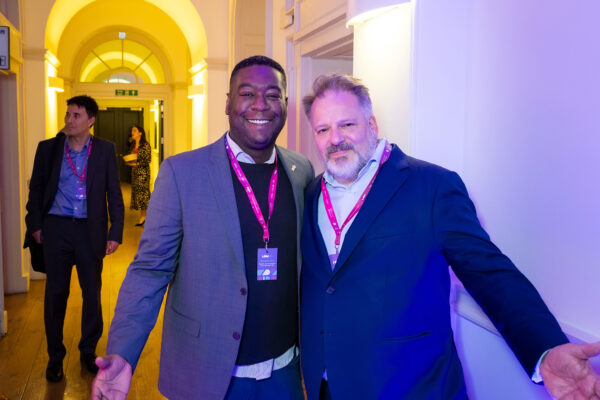
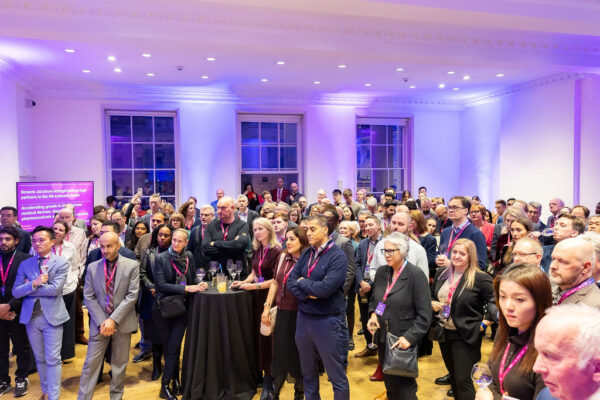
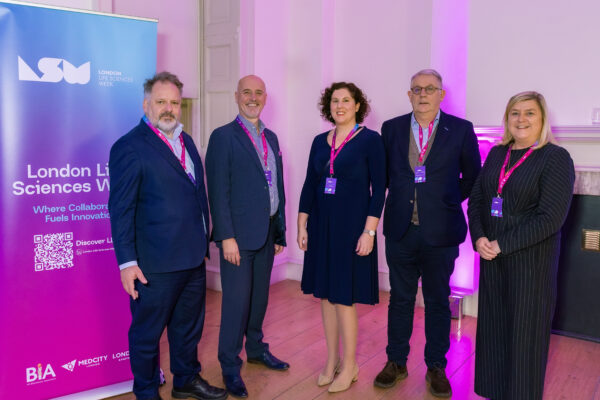
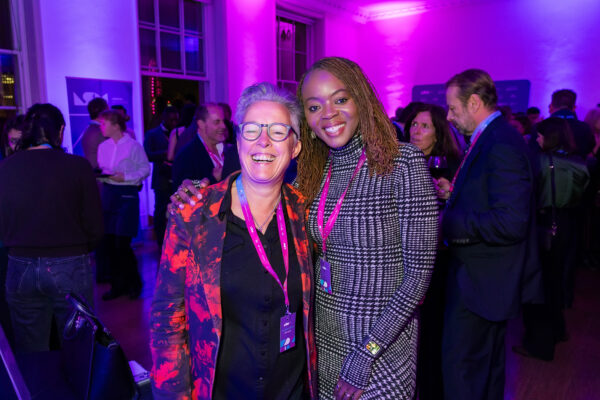
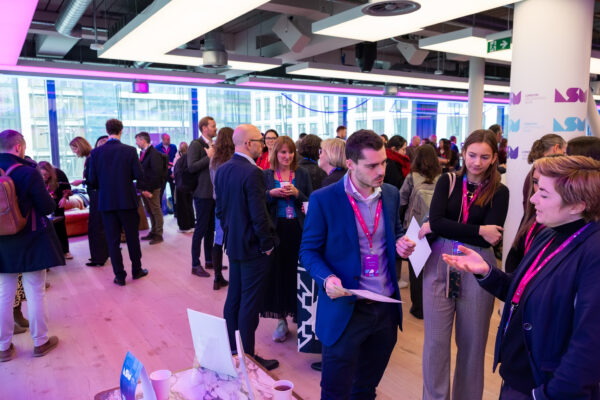
Our annual Welcome to London Reception takes place at the start of London Life Sciences Week, bringing together sector leaders and international attendees. The event sets the tone for the week while providing the opportunity for attendees to make initial introductions paving the way for a week of dealmaking.
This year’s reception took place at the iconic Somerset House, overlooking the picturesque ice rink, which set the scene for the evening with a festive twist. The room was bustling with energy with more than 200 guests in attendance.
During a high-energy networking session, we heard from several inspiring speakers. Dr Angela Kukula, CEO at MedCity and Director of Life Sciences at London & Partners, reflected on the strength of London’s innovation ecosystem, while Dr Zubir Ahmed MP, Parliamentary Under-Secretary of State for Health Innovation and Safety, highlighted the strong momentum in the UK life sciences sector and the scale of growth we can expect in the years ahead.
Howard Dawber OBE, Deputy Mayor of London for Business and Growth, reminded us that “We’re here to do deals!” and highlighted London’s vision for economic growth powered by science and technology.
Ian Murchie, from Barclays Corporate Banking, highlighted the power of investor confidence and long-term backing for founders scaling breakthrough technologies, while Steve Bates OBE, FMedSci, Executive Chair, Office for Life Sciences, reflected on the fast pace of growth within the sector.
Day one: The Future of Life Sciences
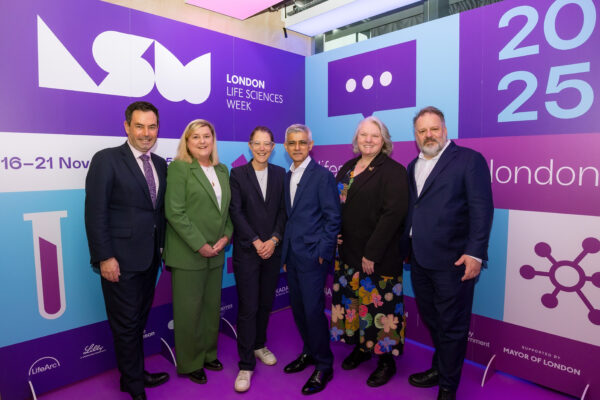
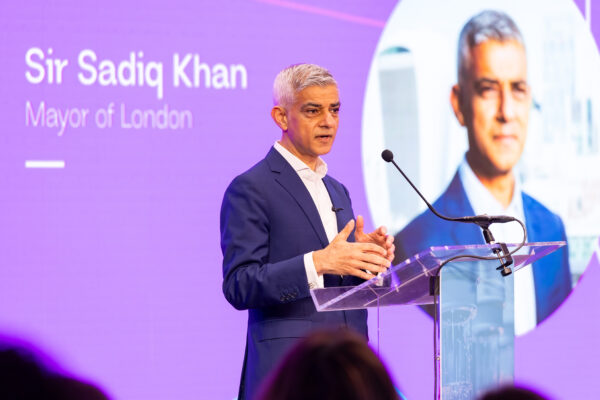
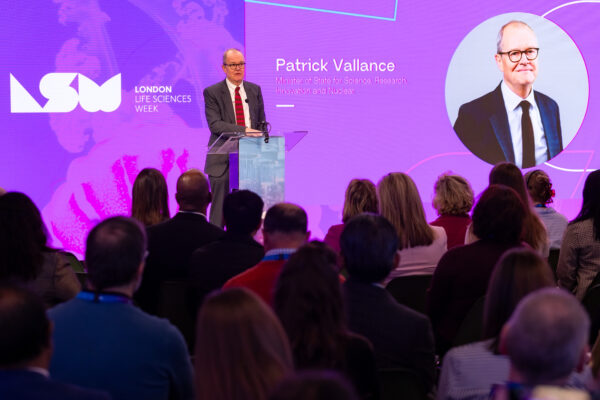
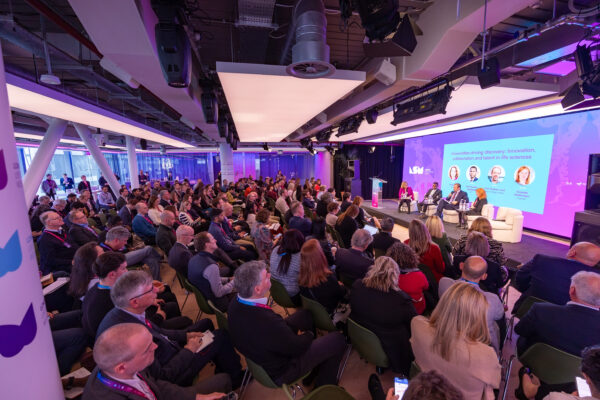
We took over 180 Studios in central London, just a few minutes’ walk from the Jefferies European Healthcare Conference, to host the London Life Sciences Week Pavilion. We kicked off the week with the Future of Life Sciences event, featuring several VIP speakers and a room packed with innovators, investors, university representatives and leaders shaping policy, research and innovation within life sciences.
In his keynote address, the Mayor of London, Sir Sadiq Khan, emphasised the London Growth Plan and highlighted why London is a leading city for life sciences, talent, research and universities.
”“From the discovery of penicillin to uncovering the cause of the cholera outbreak, London is a beacon for learning, research and progress.”
Sir Sadiq Khan, Mayor of London
Patrick Vallance, Minister of State for Science, Innovation, Research and Nuclear, said that the government is “clear-eyed about the challenges” facing the life sciences sector. He spotlighted how London is leading in investment -£1bn more than Paris, Stockholm and Berlin and outlined the ambition to turn the UK into Europe’s leading life sciences economy by 2030 and one of the top three countries globally by 2035, alongside the US and China.
Dame Anne Glover from Amadeus Capital shared investor-focused insights, including the growing importance of convergence between technology and life sciences , the value in taking risks early and how investment can drive momentum through talent development – training venture capitalists, educating asset managers and shifting pension regulation to be more return-focused.
Professor Jason Chin discussed how generative biology can make biotech manufacturing greener, while speakers Professor Graham Lord from King’s College London, Professor Ibrahim Abubakar from University College London and Amanda Wolthuizen from Imperial suggested the key takeaway for investors and researchers:
”“Be more ambitious, embrace risk and be ready to try and fail.”
We then heard from Dr Sam Barrel, CEO of LifeArc, who detailed a compelling patient story highlighting the urgent need for improved market access and investment in rare disease research. The discussion then shifted to AI in life sciences. Chaired by Samantha Simmonds, panellists Dr Laura Acqualagna from GSK, Ben Taylor from Recursion, Manish Gupta from Indegene and Dr Winston Haynes from LabGenius emphasised AI’s real potential in drug discovery when paired with robust datasets and experimental validation.
The morning concluded with Dr Christina Coughlin, CEO at Avacta Therapeutics, who gave interesting insights into reimagining doxorubicin (a 50-year-old drug) through technology; and Helena Sans from Barclays Corporate Banking who reinstated the importance of the sector to the government.
The energy flowed into the afternoon, kicking off with Jo Pisani and Howard Dawber OBE. Howard highlighted London’s status as the global capital for universities, academics and students, and how this drives growth. He also addressed how the London Growth Plan aims to tackle existing challenges.
”“People, places and partnerships are shaping the future of life sciences.”
Howard Dawber OBE, Deputy Mayor of London for Business and Growth
We then heard from Matt Allen from Oxford-Cambridge Supercluster Board, Sarah Haywood from Advanced Oxford and Kathryn Chapman from Innovate Cambridge about why the Golden Triangle remains a global magnet boasting research strength and unmatched innovation ecosystems, with the region attracting 63% of deep tech and life sciences investment.
In a panel chaired by Dr Angela Kukula, we heard further insights from Dr Suki Balendra from Paddington Life Sciences, Shanice Wallace from City of Boston, Professor Joann Rhodes from HIRANI and Fredrik Warneryd from the Swedish Chamber of Commerce for the UK. They highlighted the factors that drive successful clusters, including expertise, lab space and strong connectivity, and emphasised the need for the government to review regulations so London can continue to attract international talent.
Chaired by Dr Ivana Poparic, the Head of Cluster Development at MedCity, panellists Professor Gino Martini from PHTA, Hideo Yura from JETRO, Dr Grant Bourhill from Barts Life Sciences and Miquel Salas from Biocat concluded the day with a discussion about various cluster models, acknowledging that regions such as Japan and Catalonia benefit from flexible regulation.
Day Two: The Future of Health
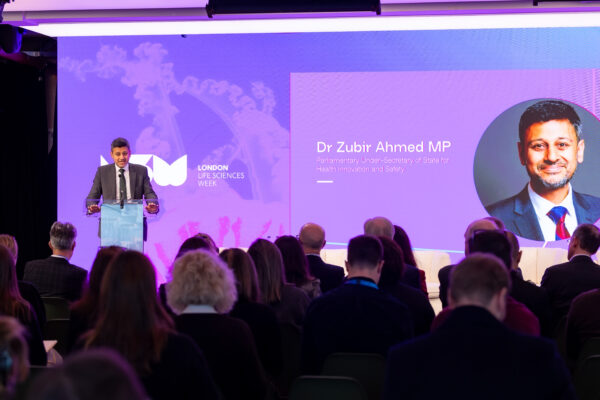
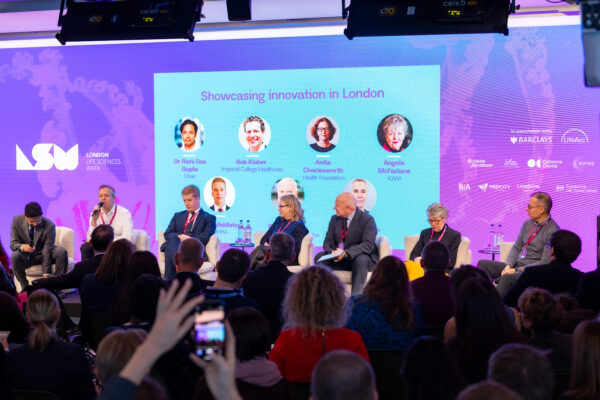
Day two brought together leaders defining how innovation will shape healthcare across London and the UK. Dame Caroline Clarke from NHS England reaffirmed the NHS’ move towards a more patient- and community-driven future, highlighting the importance of breaking down data barriers while outlining priority areas within the NHS’ 10-year plan.
We heard from Dr Zubir Ahmed MP, Parliamentary Under-Secretary of State for Health Innovation and Safety, who shared the government’s vision for the Health Innovation Zones, national data strategy and the Life Sciences Plan, reinforcing government backing for innovators through faster MHRA approvals, simpler NHS IP pathways and better support to scale breakthroughs.
”“We are determined to unlock local creativity, to build companies that grow here, employ here and invest here.”
Dr Zubir Ahmed MP, Parliamentary Under-Secretary of State for Health Innovation and Safety
Chaired by Rishi Das-Gupta from South London Health Innovation Network, the following session showcased innovation in London, with panellists Bob Klaber from Imperial College Healthcare, Anita Charlesworth from the Health Foundation and NWL ICB, Angela McFarlane from IQVIA, Dr Ed Middleton from MHRA, Andrew Miles from Our Future Health and Professor Ian Abbs from Healthcare Data for London. One topic was regulation, with panellists reiterating Dr Ahmed’s argument that MHRA’s policy can help fast-track approvals, as well as highlighting the importance of transparency and strong governance in AI, which should take precedence over creating new algorithms.
Discussions on London’s health innovation landscape followed, highlighting the importance of avoiding re-proving work that is already proven and how to use proven success as a blueprint that can be scaled and replicated. We were reminded why health systems should prioritise effectively by recognising the volume of innovation and focusing on solutions that offer strong ROI, particularly those that reduce health inequalities. On the panel chaired by Dr Chris Laing from UCL Partners, was Usman Khan from NHS England, Dr Dom Pimenta from TORTUS, Hugh Lloyds Jukes from Health Navigator and Dr Elina Naydenova from Feebris.
Closing the morning session was Dr Chris Streather from NHS England, who highlighted London’s diverse population and uniquely rich data.
”“The purpose of our life sciences strategy is clear: improve the health of the people we serve, create wealth and attract investment into the economy, and address healthcare inequalities.”
Dr Chris Streather, NHS England
During the afternoon, we were joined by Richmond Pharmacology, who celebrated five years of CRISPR breakthroughs. Key takeaways included:
- Gene therapy is transformative but requires careful planning, investment and infrastructure.
- Better long-term data collection is needed. The UK, through the NHS, is well placed to gather and link long-term patient data effectively.
- Progress is about collaboration. It’s about the companies that genuinely want to understand the patient’s perspective and their families.
- Early diagnosis of diseases and the pathway to its diagnosis is an important part of treatment.
Day three: Bench to Business Showcase
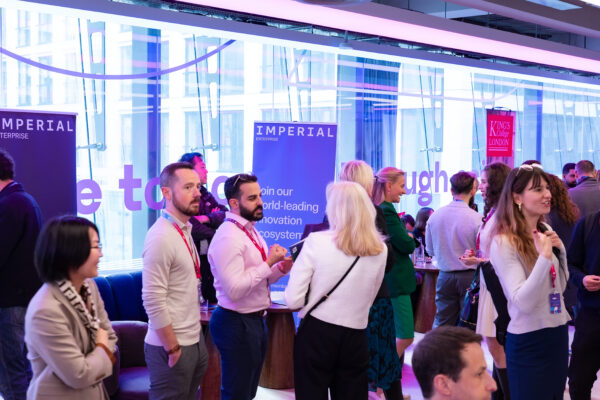
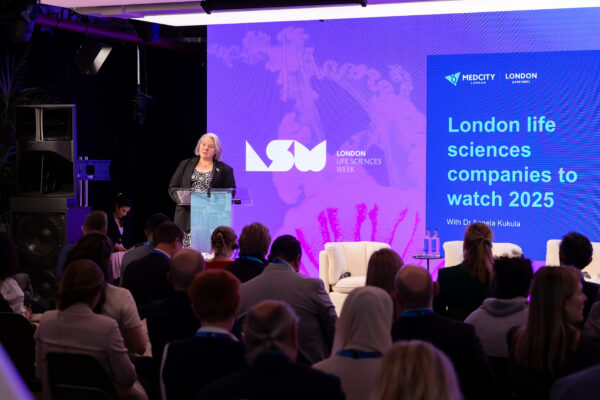
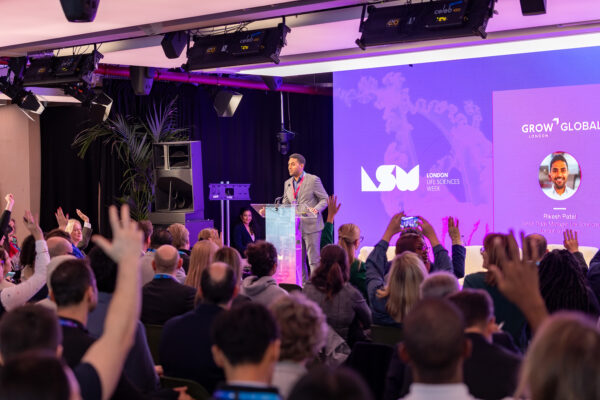
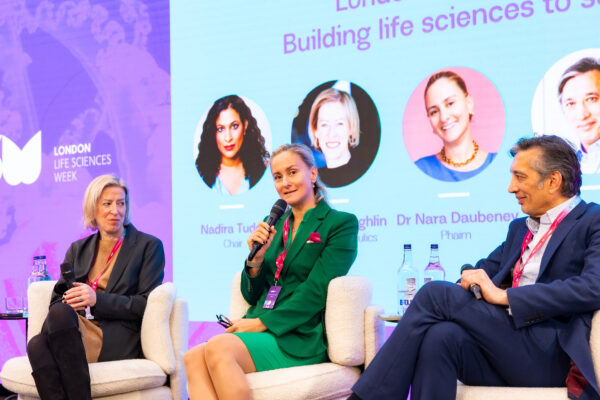
On day three, inspiring speakers and entrepreneurs took to the stage to showcase their breakthrough companies, thought–leaders shared their innovative ideas and unique perspectives, and investors met with the next wave of transformative companies in life sciences.
”“2026 is going to be a pivotal year for life sciences in London.”
Dr Anne Lane, UCL Business
Chaired by Nadira Tudor, the morning panel discussion, with panellists Dr Christina Coughlin from Avacta Therapeutics, Dr Raj Mehta from Adendra Therapeutics, Dr Nara Daubeney from Phaim and Dr Shakiba Kaveh from Mitra Bio, brought compelling insights including:
- Hire the best and leverage London as it is a great ecosystem.
- To scale up startups, four things are crucial: talent, infrastructure, funding and a big market to scale, all of which we have in London.
- Dealing with London universities is pragmatic and easy, they understand and appreciate time and money, and they get the work done.
- Advice for founders, investors, doctors and VCs: take risks. Safe bets might feel good in the beginning, but they won’t go far.
We then heard from our very own Rikesh Patel, Senior Trade Manager at London & Partners, who emphasised Grow London’s role in helping organisations expand internationally as well as positioning London’s life sciences ecosystem as a global bridge. Dr Angela Kukula highlighted the rise in investment, particularly from AI-led life sciences companies, and emphasised the vital role of London’s universities and research institutions in establishing the city as a leading life sciences ecosystem in Europe.
Dr Kukula introduced our London Life Sciences Companies to Watch 2025 brochure, which features some of the most promising innovative companies across London and the UK, linking them to investors.
Who are the emerging stars of the sector?
These companies demonstrate the breadth, depth and innovation of scientific research and development in London, which will address some of the biggest future health and research challenges.
The session then proceeded with high–energy quick–fire pitches from the founders of some of the highlighted companies, giving them the opportunity to present their companies to a room filled with investors and industry leaders. We heard from:
- Signatur Biosciences
- Hypervision Surgical
- Charco
- Vivan Therapeutics
- Micrographia Bio
- Echopoint Medical Ltd
- Entia
- Epsilogen Ltd
- Axovia Therapeutics
- LIfT BioSciences
- Genevation LTD
- P.Happi®
- MediSieve
- Phaim
- LindusHealth
- Adendra
- Mitrabio
- Relation
- Imu biosciences
- Avacta Therapeutics
- Nicolas
We also heard compelling panel discussions focusing on investment trends, with panellists including Dr John Baker from IMU Biosciences, Meri Beckwith from Lindus Health and Benjamin Swerner from Relation Therapeutics.
Nicki Bromwich, Head of Life Sciences Programmes at MedCity, highlighted that most London spinouts choose to stay in the capital, and that companies originating from other UK universities often relocate here as small teams but scale rapidly.
”“We’re seeing the next generation of companies, ripe for investment, hearing from the teams poised to carry forward London’s legacy.”
Nicki Bromwich, Head of Life Sciences Programmes, MedCity.
Howard Dawber OBE, shared insights on the role innovation plays in London’s economic vision, and the importance of ensuring that entrepreneurs, researchers and investors feel supported as they scale new ideas. He highlighted the standout announcement that the city is now delivering 6m sq ft of new labs, including an 800,000 sq ft Canary Wharf site set to be the world’s tallest life sciences building, alongside expanding scaleup space in AI, data and deep tech.
The role of universities was not missed, and the part they play in shaping global leadership was a running theme throughout the day. Breakthroughs from UCL, King’s College London, Imperial , Queen Mary University of London, Brunel University of London and The Institute of Cancer Research highlighted the depth of talent and discovery that defines London’s academic community. Their presentations demonstrated that the pipeline from research to commercialisation has never been stronger.
We then heard spinout pitches from more than 30 university spin-outsacross three categories – therapeutics, medtech and diagnostics, and mobile health and drug discovery – showcasing technologies already transforming patient outcomes.
Every pitch and panel reflected the same underlying theme. London’s life sciences ecosystem is powered by ambition, fuelled by collaboration and strengthened by the diversity of ideas, backgrounds and disciplines represented across the sector.
Community Events
As part of the week, we funded five community events, designed to engage diverse audiences across age groups and backgrounds, including schoolchildren, students and local residents. The activities ranged from interactive careers fairs and lab tours to public pop-ups, youth-led panels and cross-sector networking.
The events were delivered in partnership with education, healthcare, research and industry, with a strong focus on accessibility, inclusion and inspiration, particularly for underrepresented groups. They highlighted the breadth of opportunities within life sciences while strengthening community connections and raising awareness of health, innovation and career pathways across the city.
SC1 Pathfinders: The Next Generation of Life Sciences event, was aimed at making life sciences more accessible and relevant to local communities, particularly young people aged 16-17 and those not in education, employment or training.
The energy was electric and the afternoon inspired the next generation of scientists, academics and innovators. The importance of collaboration and the need for role diversity within life sciences was a key takeaway.
”"Life science is key to developing the society we live in."
Emanuel Wallace (Big Manny), Biomedical Scientist turned science communicator
Highlights from the event included:
- Mind– moving experiments including extracting DNA from a tomato.
- Live Q&A panel inspiring our future scientists and talent.
- Super skills session highlighting the importance of recognising your strengths.
Barts Life Sciences and LIFT hosted a careers-focused engagement event designed to introduce local communities, particularly individuals from underrepresented backgrounds, to the life sciences sector. The event featured presentations and interactive sessions. Key activities included career pathway overviews, interactive “day in the life” demonstrations and showcases from startups and training programmes.
Canary Wharf Group delivered a series of public engagement and educational events under the Demystifying Life Sciences campaign. The initiative increased awareness and understanding of life sciences among the public and local students, particularly those from underrepresented backgrounds, supporting broader inclusion and interest in the life sciences sector.
Paddington Life Sciences delivered a series of events in collaboration with local primary and secondary schools. The programme inspired interest in life sciences among young learners and strengthened connections between schools and industry.
Wrap up Event
And finally, Knowledge Quarter, in partnership with Venture Café London, hosted the official wrap up reception for London Life Sciences Week 2025. The event took place at the newly-opened innovation hub, British Land’s One Triton Square. Speakers included: Liam Ward, Venture Café London and, Howard Dawber OBE, Deputy Mayor of London for Business and Growth.
The event included a panel discussion chaired by Daniel Glaser, Google DeepMind with panelists, Dr Najat Khan, PhD, Recursion, Dr Elsa Zekeng, SökerData and James Wong, Foresight Group.
The evening highlighted the strengths of the Knowledge Quarter, one of London’s key life sciences clusters, with Daniel noting that people “move beyond their silos and exchange ideas in unconventional ways”, reiterating the strength of multidisciplinary talent within the sector.
We would like to extend a huge thank you to all our partners and stakeholders for helping us make London Life Sciences Week 2025 a success. In particular, we would like to thank the BioIndustry Association (BIA), with whom we co-hosted the week , as well as our sponsors – Barclays Corporate Banking, LifeArc, Eli Lilly and Company, Browne Jacobson, Osbourne Clarke, Boulder Creative Studio, Canary Wharf Group and Kadans.
Want to relive the week or couldn’t make it?
Watch the highlights from London Life Sciences Week 2025.
Learn more about why London is a prime destination to set up a Life Science business.